How much does user research cost for a small business?
Learn what user research costs in India, which methods suit a small business, what changes the quote, and how to compare vendors before you commit.
Learn when a UX designer is enough, when you need a product designer, and how to choose the right support for your website or app.
Hire a UX designer when your main problem is how people use an existing website or app. Hire a product designer when you also need help deciding what to build, for whom, and how the whole service should work.
The titles overlap, so do not choose by title alone. Choose by the decisions you need help with, the stage of your project, and the work you expect to receive.
A UX designer is a good fit when your website or app already exists but customers struggle to use it. They can study user behaviour, improve navigation, simplify forms, clarify page content and test key tasks such as booking an appointment or submitting an enquiry.
A product designer usually works across a wider set of decisions. They connect user research, user experience, visual design and product planning, so they can help you decide which problem to solve before deciding how the screens should look.
Consider a clinic where patients abandon the online booking form. If the services, appointment rules and payment process are already clear, a UX designer may be enough to find and remove the friction. If you are planning a new patient app with bookings, medical records and payments, a product designer is usually the better fit.
Job titles vary between companies. Ask what the person will own, from research and user flows to interface design, testing, developer handover and decisions about the first release.
A UX designer focuses on user needs and task completion. Their work may include interviews, maps showing how people use a service, information architecture, wireframes, clickable prototypes and usability tests. They look for the point where a person becomes confused, leaves, or makes a costly mistake.
For example, a UX designer might observe how parents pay school fees online. They may find that parents cannot tell which child is selected, do not know whether a payment succeeded, or cannot find the receipt afterwards. The resulting work could include clearer steps, better error messages and a simpler receipt process.
What does a product designer do? They may help define the target user, clarify the business goal, shape the feature set, design the interface and work with developers as the product takes form. They need to balance customer needs with pricing, operations, technology and the time available for development.
Visual design is not the same as UX design. A polished school fee portal can still confuse parents if the payment steps, receipts and error messages are unclear. Colour, typography and layout matter, but they cannot compensate for a service that has unclear rules or too many unnecessary steps.
Ask for the actual deliverables before you appoint someone. Depending on your project, these may include:
Do not hire a product designer for a small usability fix when your screens, features and business rules are already clear. A focused UX review may cost less and finish sooner. It could identify that the booking button is hard to find, the form asks for unnecessary information, or the confirmation message is missing.
Do not ask a UX designer to define your entire product without giving them access to customers, business goals and technical constraints. Without that information, they may make reasonable looking recommendations based on guesses. Give them access to support records, analytics, sales staff or real users wherever possible.
Do not choose from portfolios based only on visual style. Attractive screens can hide weak decisions. Check whether the examples show the original problem, the research used, the alternatives considered, the testing completed and what changed after feedback.
Designers also cannot fix a product with unclear ownership. Agree who decides the scope, content, pricing, technology and launch timing. If a marketing manager approves one screen, a director changes the feature list and a developer rejects the interaction later, the project will lose time.
The cost and timeline depend on the number of user groups, screens, platforms, research participants and the condition of your existing design. They also depend on whether your content and business rules are ready. Request a phased proposal, such as discovery, task design, interface design and testing, instead of asking for one large estimate with no assumptions.
For an early idea, start with a product designer who can turn a business goal into a tested concept before development begins. Suppose you want to build a platform for home nursing visits. The first task is not drawing every screen. It is deciding how patients request care, how staff accept visits, how pricing works and which information each person needs.
For an existing app with complaints about confusing screens, start with a UX audit and usability tests before redesigning everything. A few observed booking or payment sessions may show that only one part of the flow needs attention. This protects you from spending on a new visual style when the real problem is unclear wording or poor information order.
For an online store selling through Instagram and a website, product design may help connect the full buying process. Customers need to move from a social post to useful product details, stock information, checkout, delivery updates and repeat orders without losing trust at each step.
If your team already has product direction and user research, a UX designer can focus on flows and interaction details. If those decisions are missing, include product design in the brief. Otherwise, the designer may produce screens for features that are not useful, affordable or ready to build.
You may need both skills for a larger service, such as a banking portal, education platform or business software used by several teams. One person can sometimes cover both areas, but confirm their experience rather than assuming the title tells you. Ask whether they have made product decisions as well as designed and tested interfaces.
A good first conversation should reveal how the designer thinks, not just how their portfolio looks. Ask questions that expose their process, the information they need and the decisions they expect you to make.
Pay attention to the answers. A designer who asks about your customers, operational rules and technical limits is more likely to give useful advice than someone who promises a complete redesign without seeing the current product.
Start by writing down three things: the user problem, the business goal and the project stage. Then ask each designer to explain what they would do first, what they need from you and what decision their first phase will help you make.
Dotdunia can help you plan the right design role or build the website, app or business software that follows. Visit www.dotdunia.com to start a conversation about your project.
Learn what user research costs in India, which methods suit a small business, what changes the quote, and how to compare vendors before you commit.
Learn what UX design costs in India, what changes the quote, and how to compare proposals before hiring a design partner for your website or app.
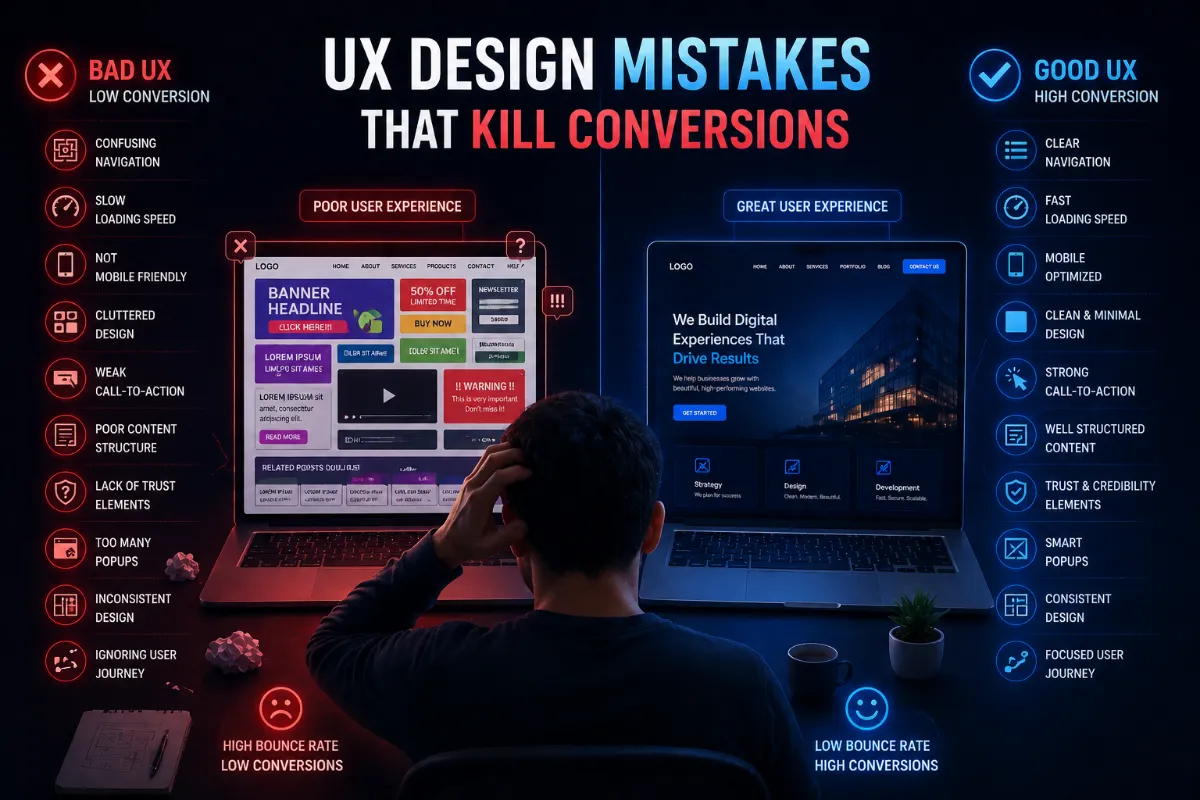
You can drive thousands of visitors to your website, but if your design is poor, those visitors won't convert.