
Should you hire a UX designer or product designer?
Learn when a UX designer is enough, when you need a product designer, and how to choose the right support for your website or app.
Learn what user research costs in India, which methods suit a small business, what changes the quote, and how to compare vendors before you commit.

A focused user research project for a small business in India usually costs ₹25,000 to ₹75,000. Treat this as a typical starting range to confirm with vendors, not as a fixed market price.
The right price depends on your research question, participants, method, language, location, incentives, and the amount of analysis you need. A clinic testing an appointment form may need a smaller study than a retailer planning a new shopping app.
A focused project in this range might include a planning session, a short research plan, a few customer interviews or usability tests, analysis, and a practical recommendations report. The researcher may also help you prepare the questions, tasks, prototype, or website screens used during the sessions.
For example, a clinic may ask five to eight patients to book an appointment through its website or WhatsApp link. The researcher watches where people hesitate, records what they misunderstand, and explains which changes could improve completed bookings.
The cost changes when the study needs more participants, harder recruitment, several languages, multiple cities, specialist users, travel, or more detailed reporting. Ask the vendor to show these parts separately so you can see what is driving the quote.
A retailer planning a shopping app may need interviews with existing customers, people who buy through Instagram, and customers who shop through marketplaces. It may also need competitor review and testing of several user groups, such as frequent buyers and first time buyers.
A study can often be planned and completed within two to four weeks when participants are easy to find and sessions happen remotely. Recruitment across several cities, specialist audiences such as doctors or exporters, or several rounds of testing can extend both the timeline and the budget.
A usability test of an existing website or prototype is usually simpler to scope than broad market research. The team can give people specific tasks, such as finding a product, checking delivery charges, requesting a quote, or booking an appointment.
This approach works well when you already have a website, app, or design prototype and need to find task problems before more development. It can also help you decide which changes to make first on a limited budget.
A survey can reach more people, but it still needs clear questions and relevant responses. A large response count does not correct a poorly designed survey. If the questions lead people towards a preferred answer, the results may give you confidence without giving you useful evidence.
Customer interviews cost more when participants are difficult to find. Speaking with school administrators, doctors, exporters, property managers, or business owners in one industry takes more recruitment effort than speaking with general consumers.
Field visits add travel, scheduling, and observation time. They make sense when the problem happens at a shop counter, clinic reception, warehouse, or school office rather than on the website. For example, observing how a school office records fee payments may reveal delays that parents never mention in an interview.
Ask for separate prices for research planning, participant recruitment, incentives, sessions, analysis, and presentation. This shows which parts your team can handle internally. You may be able to provide customer contacts or arrange access to a branch, while the researcher manages the sessions and analysis.
Define the decision before choosing the method. Ask why visitors abandon a clinic booking form, not what users think about the whole clinic website. The narrower question helps the researcher choose suitable participants, tasks, and evidence.
Test the highest risk part first. If a retailer is unsure whether customers understand delivery charges, test that flow before spending time on colours, logos, or page animations. If customers cannot complete checkout, visual preferences should not be the first concern.
Decide how much evidence you need for the decision. Five well chosen usability sessions can reveal serious task problems. A pricing decision may need interviews across different customer types because a regular buyer, a new buyer, and a business buyer may judge the price differently.
Select participants based on behaviour, not only age or location. For a school fee portal, speak to parents who have paid fees online and those who still use the office counter. For a clinic, include patients who have booked online and people who usually call reception.
Keep the deliverable practical. A recording library is less useful than a prioritised list of problems, supporting evidence, recommended changes, and questions that still need testing. Ask for examples showing the screen or task involved, what the participant did, and what the business should change.
Do not recruit only friends, staff, or existing loyal customers. They may understand your business too well and overlook problems faced by new customers. A staff member may know where a form field is, while a first time visitor may not understand what information to enter.
Do not ask people what they would do in general when you can watch them complete a real task. A customer may say a form looks simple but still fail to submit it when asked to use it. Observed behaviour usually gives you more useful evidence than opinions alone.
Do not treat every finding as equally urgent. A confusing payment step can cost more than a minor layout preference. Ask the researcher to connect each finding to business impact, such as abandoned bookings, extra calls to staff, delayed payments, or missed enquiries.
Reducing participant incentives or the number of sessions may lower the quote, but it can also reduce the range of views. Agree on the minimum sample needed for your decision instead of choosing the lowest number without discussing the risk.
You can also reduce cost by using remote sessions, providing suitable participants, or limiting the study to one customer group. These choices are reasonable when the decision is narrow. They are less suitable when you serve several languages, cities, or types of customer.
Avoid commissioning research without agreeing how the findings will affect the next design or product decision. Otherwise, the report may sit unused while development continues. Before the work starts, identify who will review the findings and which decision will follow.
A quote should explain what the researcher will do, who will take part, what you will receive, and when each stage will happen. Use these questions to compare two quotes that may appear similar at first:
Ask to see an example of the final output with sensitive client information removed. It should show the evidence, findings, priorities, recommended next steps, and questions that still need testing. A report that only lists observations may leave your team unsure what to do.
Confirm ownership of recordings and research notes, confidentiality arrangements, taxes, travel, participant incentives, and extra rounds of revisions. Also check whether the presentation is made for your decision makers, rather than being a technical document that only the research team can interpret.
Start by writing down the customer decision you need to make, then request a quote for that specific question. Dotdunia can help plan the research and build the website, app, or workflow that follows from the findings. Visit www.dotdunia.com for a conversation.
Learn when a UX designer is enough, when you need a product designer, and how to choose the right support for your website or app.

Learn what UX design costs in India, what changes the quote, and how to compare proposals before hiring a design partner for your website or app.
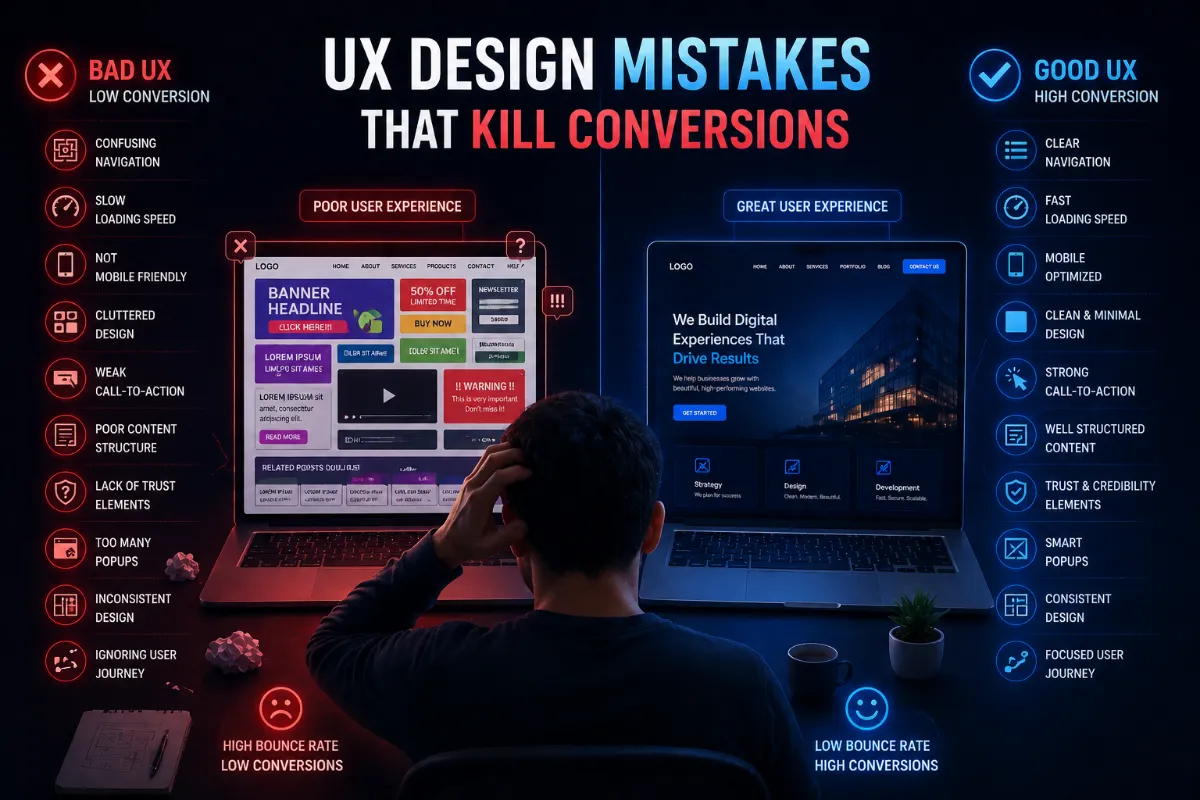
You can drive thousands of visitors to your website, but if your design is poor, those visitors won't convert.