
10 UX design mistakes that are killing your website conversions
You can drive thousands of visitors to your website, but if your design is poor, those visitors won't convert.
Learn what UX design costs in India, what changes the quote, and how to compare proposals before hiring a design partner for your website or app.

UX design in India can cost tens of thousands of rupees for a focused review or one booking flow. Research, UX and UI design across several flows, user testing, and developer handoff can run into several lakhs.
The right budget depends on the product, number of users, research required, and depth of delivery. Treat any range as a planning band, then ask what the fee includes before comparing it with another quote.
A focused UX review or one important flow may cost tens of thousands of rupees. This could cover a clinic's appointment booking process, a retailer's product discovery and checkout, or a review of the main pages on an existing website.
A larger project can run into several lakhs when it includes user research, information architecture, wireframes, visual design, interactive prototypes, usability testing, and developer support. A school building a parent app for admissions, fee payments, attendance, and messages needs more work than a clinic improving one booking process.
These are planning bands, not fixed market prices. An experienced freelancer, small studio, and larger agency may quote differently for similar work because their team structure, process, research depth, and level of involvement differ.
A useful quote should describe the work in terms you can check. It should state the number of screens or flows, research activities, design rounds, testing method, deliverables, and handoff support.
A low fee can look attractive while excluding the work you actually need. If the proposal only promises a set of screens, ask who will decide the structure, test the flow, prepare different states, and explain the design to your developers.
An audit identifies problems in an existing website or app. The designer may review analytics, observe the current flow, inspect content and navigation, and provide prioritised recommendations. It usually costs less than designing a new product because the basic structure and content already exist.
New product work starts with more uncertainty. It may include user interviews, competitor review, information architecture, user flows, wireframes, visual design, interactive prototypes, usability testing, and specifications for developers.
Choose the smallest useful scope. For an Instagram-led retailer, improving product discovery, checkout, delivery information, and order updates may be more valuable than redesigning every page. You can extend the work after learning which changes affect sales and support requests.
UX design decides how people complete tasks and understand the product. UI design covers the visual treatment of those decisions, including colour, typography, spacing, controls, and component behaviour. A good project connects both instead of making attractive screens without resolving the underlying task.
Ask if the proposal covers mobile layouts, responsive web layouts, accessibility considerations, empty states, error messages, loading states, and design system components. These details often appear after the main screens, but they affect the real cost of building and maintaining the product.
Cost rises with the number of user types, permissions, workflows, integrations, and edge cases. A customer portal may be fairly direct, while a business system serving customers, staff, managers, and administrators needs different screens, rules, approvals, and error handling.
A payment flow becomes more involved when it must handle failed transactions, partial payments, refunds, receipts, multiple family members, or different currencies. A Gulf-based service may also need local language, regional payment options, and support for customers using mobile devices with slower connections.
Research needs depend on access to users. Recruiting patients, parents, field staff, or Gulf-based customers can add time and expenses when the design team must arrange interviews, screening, scheduling, or participant incentives.
Existing brand guidelines, useful content, analytics, and clear technical constraints can shorten the work. Unclear content, frequent stakeholder changes, or an unfinished backend can extend it because the team must keep revisiting decisions.
Your feedback speed also affects the timeline. Set one decision maker, agree on review dates, and collect comments in one place before work begins. If five people send conflicting changes at different times, the project will need extra rounds.
Skipping research can produce a polished flow that customers still cannot use. A fee payment page may look clean but fail because parents do not understand which student, class, or term they are selecting.
You do not always need a large research programme. A few relevant conversations, support call reviews, analytics checks, or short usability sessions can reveal problems early. The method should match the risk and cost of getting the decision wrong.
Starting with colours and screens before agreeing on user flows often creates rework. Confirm the problem, audience, key tasks, and success measure first. Then decide how much visual design and testing the product needs.
A very cheap proposal may rely on templates, limit revisions, omit testing, or hand over files without explaining decisions to your developers. Compare deliverables and working methods, not only the total fee.
Too much research can also waste money. If you have a small, familiar change such as adding a WhatsApp booking button to a clinic website, a focused review may be enough. Spend more when the decision affects many users, transactions, or internal processes.
Ask what business problem the project will solve and how the team will know the work helped. A proposal for a booking website might focus on fewer abandoned bookings, while a school app might focus on faster fee payments and fewer support calls.
Request a phase-wise scope covering discovery, structure, visual design, testing, revisions, and developer handoff. Ask what is outside the scope, how changes are priced, and what happens if a new user type or integration appears during the work.
Confirm who writes or supplies content, who recruits users, how feedback is collected, and who approves each stage. If your website needs product descriptions, fee rules, Arabic translations, or legal text, decide who owns those inputs before screen design starts.
Ask to see relevant examples, but judge them by the clarity of the process and deliverables rather than visual style alone. A beautiful portfolio does not tell you how a team handles unclear requirements, technical limits, accessibility, or feedback from several stakeholders.
Before approving, define one practical measure. It could be fewer abandoned bookings, faster fee payments, more completed enquiries, or fewer support calls. This gives you a sensible way to decide if the UX spend is doing its job.
Start by listing the users, key tasks, and screens you need, then ask for a phased scope rather than a vague redesign quote. Dotdunia can help you plan the UX work or build the website or app after the design is agreed. Visit www.dotdunia.com for a conversation.
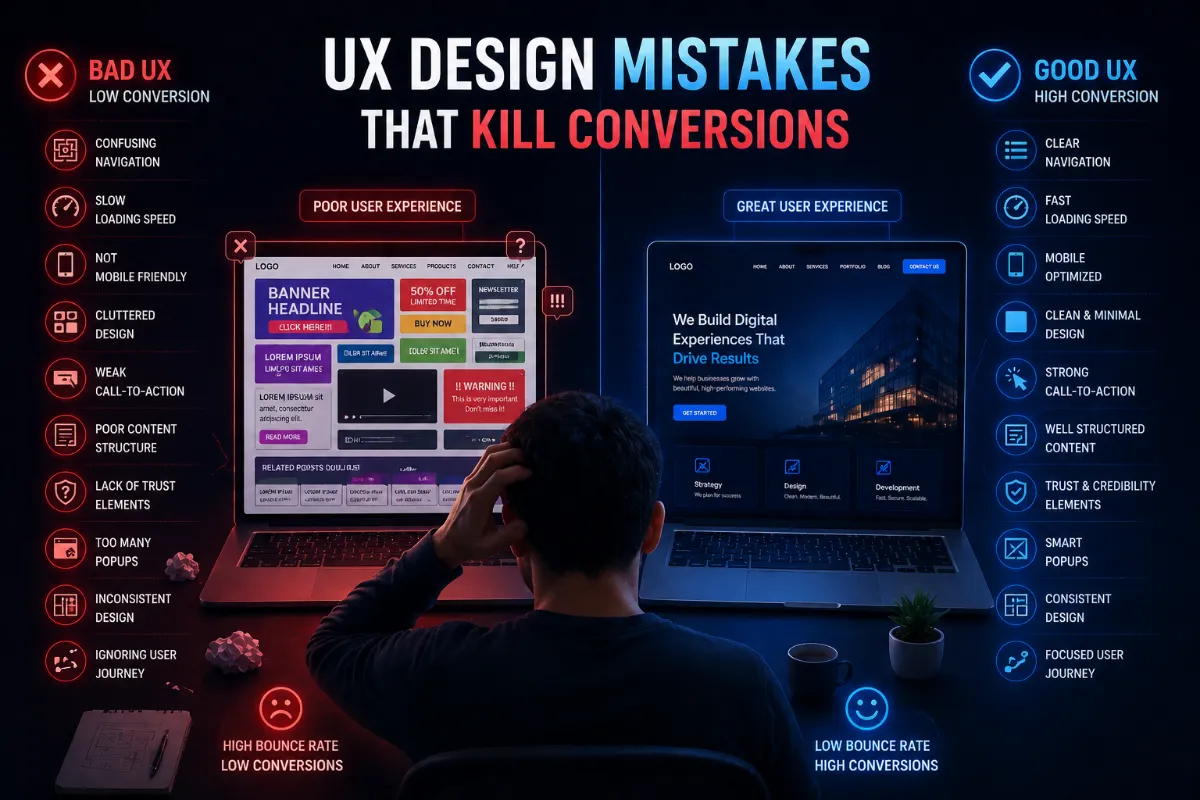
You can drive thousands of visitors to your website, but if your design is poor, those visitors won't convert.

Learn what drives custom software costs in India, how to compare quotes, which trade offs matter, and what to prepare before choosing a vendor for your business.

Learn what affects ecommerce website cost in India, which features change the quote, and what to ask before choosing a development partner.